The Serengeti is served by a number of lodges and camps ranging from small lower scale to high end accommodations to fit any budget for Safari in Serengeti. Seronera is the busiest area for tourists, with heavy safari vehicle traffic, while the northern Serengeti is much quieter.
The choice of your camp or lodge in Serengeti must ultimately be led by the Migration timing. There is no point in being in the Western Corridor if the animals are on the southern plains, or booking a Serengeti tour in the south when the animals are crossing the Mara River in the north.
The unpredictability of the rains makes it impossible to guarantee that you’ll be in the midst of the Migration for your Serengeti safari tour, but with a good ground Serengeti safari operator, you should be within striking distance.
Serengeti Lodges & Camps Locations
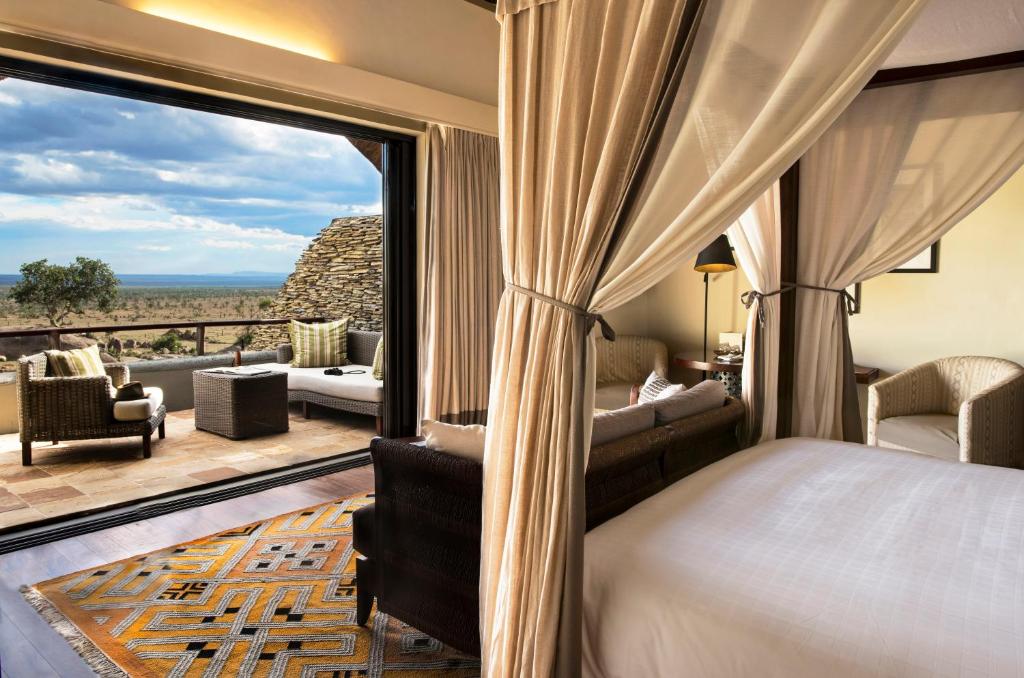


Alternatively, if you can afford the luxury price then book your Serengeti safari tour with one of the camps that set up mobile luxury camps in locations that follow the seasonal migration of Serengeti’s super herds.
There is simply no better way to experience a Serengeti National Park safari than to book a few nights in one of tgche luxury tented camps that move, following the general pattern of the Migration.
Most of these camps are set up in the northern Serengeti from June and July to October and November, and move south to the short-grass plains around Ndutu from December to March, after which they close down for tent maintenance and upgrades during April and May.
Book your accommodation early, particularly if your choice is likely to be close to the migration. Places outside the park’s western boundary, including some on the shore of Lake Victoria, are cheaper for a Serengeti safari, but – with the exception of those just outside Ikoma Gate – see next to no plains game.
You are welcome to drop in for lunch at some of the lodges – Lobo Wildlife Lodge, Serengeti Sopa Lodge and Seronera Wildlife Lodge are particularly recommended, not so much for their cuisine, which is buffet style ($30 per person), but for the amazing views.
Much cheaper meals can be had at several hotels near the Visitor Centre in Seronera, mainly used by park staff.
Camping in The Serengeti
The most atmospheric (and nerve-jangling) Serengeti safari holidays are camping safaris which overnight to camp at one of several public campsites in The Serengeti. More remote are a scatter of special campsites, which have no facilities whatsoever. Reservations for special campsites are handled by the park headquarters, or by TANAPA headquarters in Arusha, though they are very difficult to book in advance by yourself – you may strike lucky if you enquire at the park gate on arrival. If you’re self-driving, the car hire company should be able to find out what’s available, and may even book it for you.
Lobo Public Campsite
Located at the foot of a kopje, with fantastic views over the plains to the east, 76km north of Seronera, 300m northeast of Lobo Wildlife Lodge is Lobo Public Campsite. There are decent bathrooms at the camp, but the showers are cold, and nights are chilly at 1800m above sea level. You can pop over to Lobo Wildlife Lodge, on top of the next kopje 300m southwest, for lunch or drinks.
Seronera Public Campsites
Located 6–7km northeast of Seronera Visitor Centre by road is the Seronera public Campsite. There are five campsites in two clusters: Dikdik and Pimbi in the west, Nyani, Ngiri and Tumbili in the east. Each has its own bathroom with good showers, and a fenced-off kitchen and dining banda, but the campsites themselves are not fenced so wildlife including lions comes and goes. Exceptionally (driving is normally forbidden after 7pm), campers are allowed to drive to Seronera Wildlife Lodge for dinner ($30), but have to be back by 10pm.