
The Serengeti isn’t just a static landscape—it’s a living, breathing ecosystem that transforms with the seasons. These seasonal shifts dramatically influence animal behavior, migration patterns, and your overall safari experience. Understanding these rhythms can help you plan the perfect trip and witness nature at its most dynamic.
The Two Main Seasons: Wet vs Dry
Serengeti safaris two primary seasons:
- Wet Season (November–May): Lush greenery, calving season, and dramatic thunderstorms.
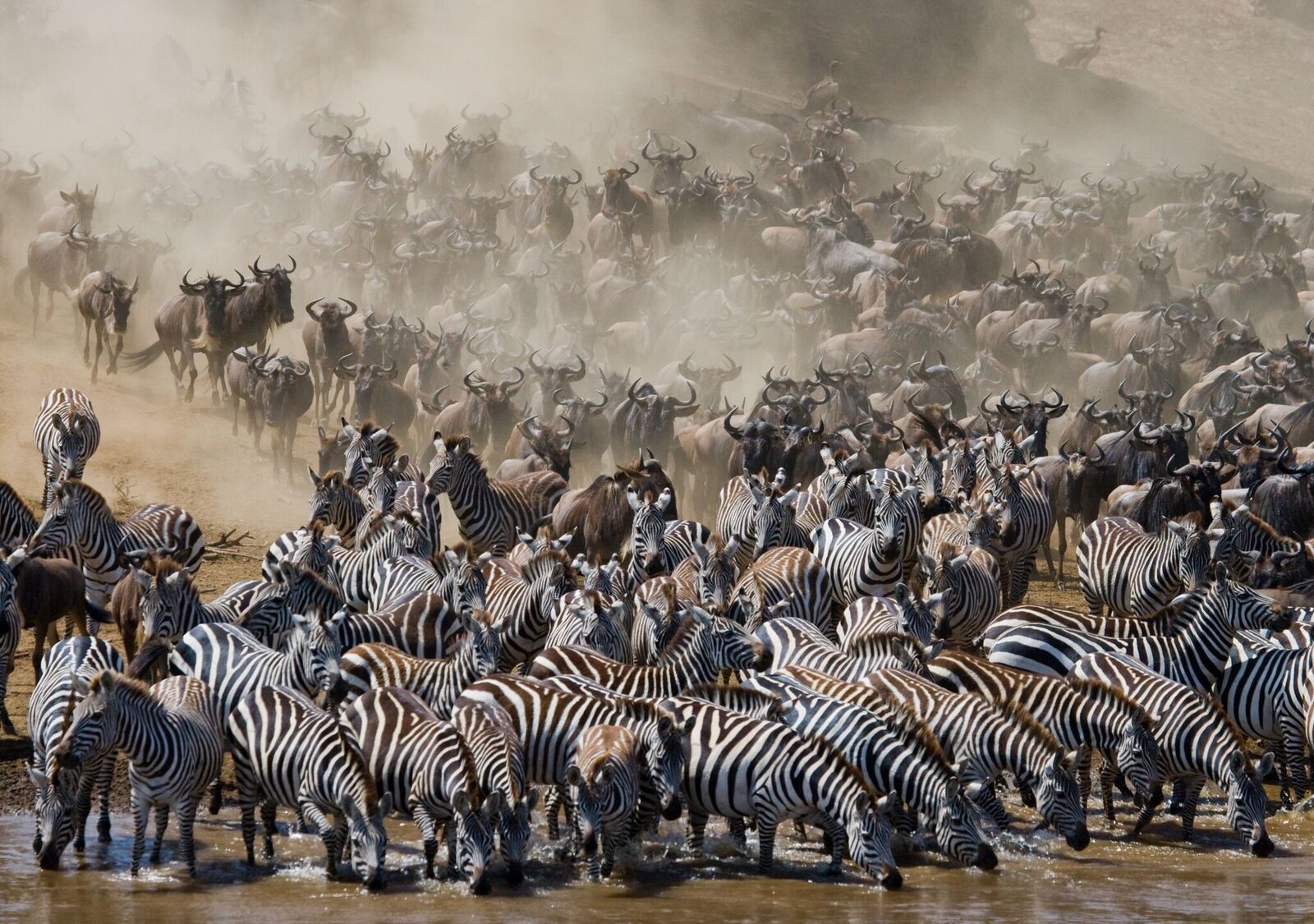
- Dry Season (June–October): Sparse vegetation, easier wildlife spotting, and the famous river crossings.
Wet Season Highlights (Nov–May)
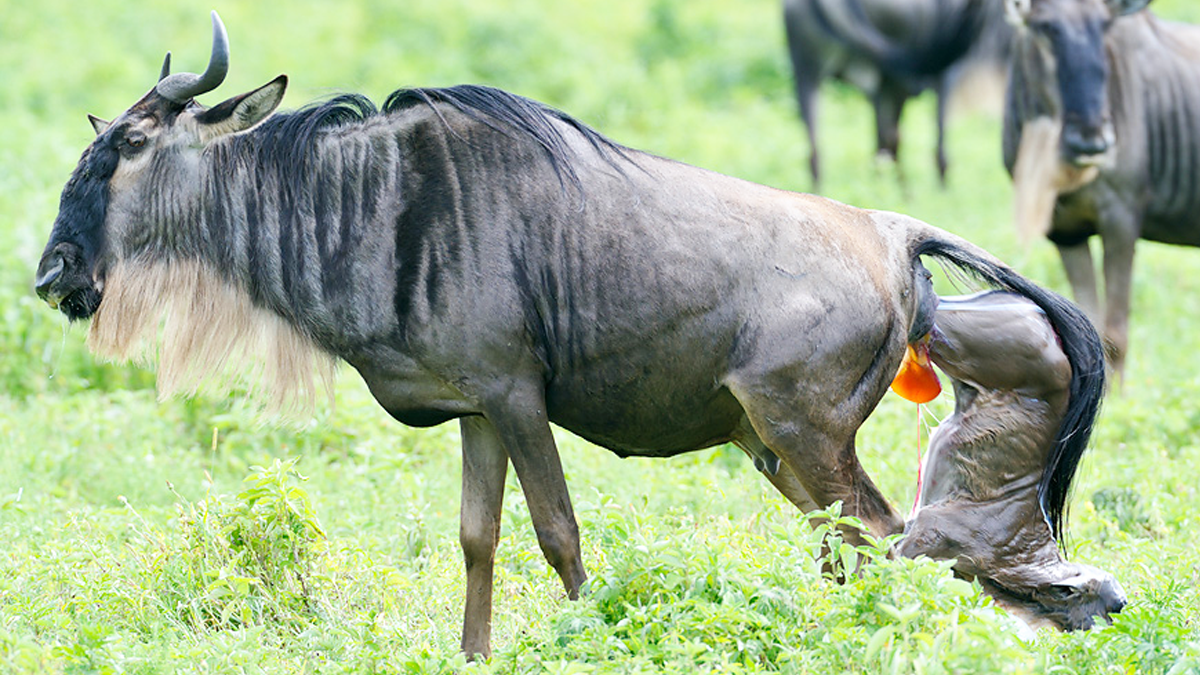
1. Calving Season (Jan–Mar)
Over 500,000 wildebeest calves are born in just a few weeks in the southern Serengeti. This attracts predators like lions, cheetahs, and hyenas in dramatic hunting scenes.
Best For: Predator-prey interactions, lush landscapes, birdwatching
2. Bird Migration
Thousands of migratory birds arrive, making this a paradise for birdwatchers.
Species to Spot: European storks, swallows, and bee-eaters
3. Greener Backdrops for Photography
The rains bring vibrant colors and dramatic skies—perfect for landscape and wildlife photography.
Dry Season Highlights (Jun–Oct)
1. The Great Migration River Crossings
Wildebeest and zebras cross the Grumeti and Mara Rivers, often facing crocodile-infested waters.
Best For: Iconic safari action, predator sightings, large herds
2. Easier Wildlife Viewing
With less vegetation and animals gathering around waterholes, it’s easier to spot the Big Five.
Top Locations: Central Serengeti, Western Corridor, Northern Serengeti
3. Cooler Mornings, Clear Skies
Expect crisp mornings and sunny days—ideal for game drives and stargazing.
Seasonal Safari Planning Tips
- For lush scenery and baby animals: Visit between January and March
- For dramatic predator action and migration crossings: Aim for July to September
- For birdwatching: November to April is peak season
- For fewer crowds and lower rates: Consider shoulder months like May or early November
Why It Matters
Understanding seasonal behavior helps you:
- Choose the right region of the park
- Time your trip for specific wildlife events
- Pack appropriately for weather and terrain
- Set realistic expectations for sightings
#seasonalsafari #wildlifebehavior #serengetiwildlife #safariplanning