
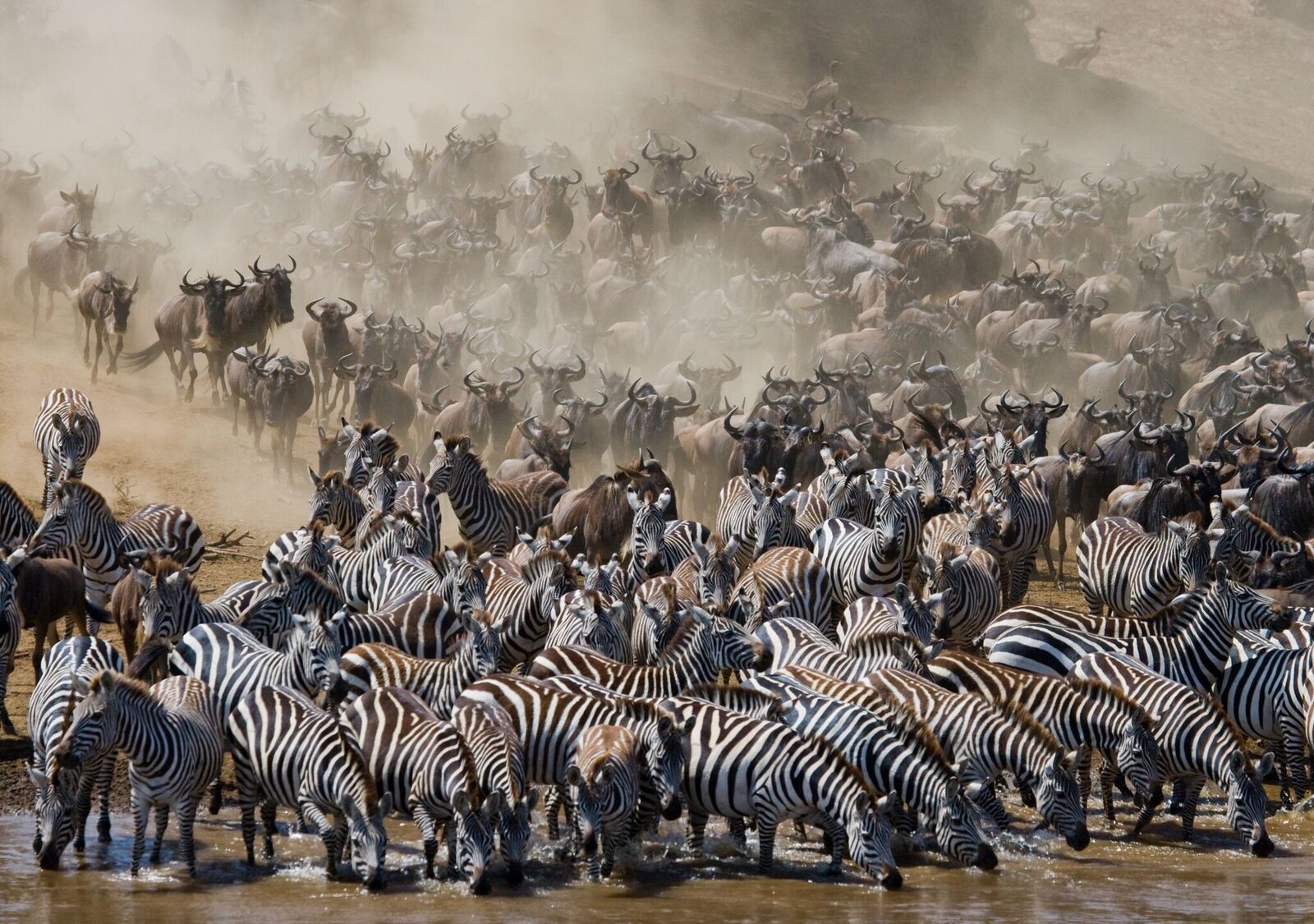
Every year, over 1.5 million wildebeest, 200,000 zebras, and 500,000 gazelles embark on a journey so epic it’s been dubbed “The Greatest Show on Earth.” The Great Migration is the heartbeat of the Serengeti—and witnessing it is a once-in-a-lifetime experience.
What Is the Great Migration?
The Great Migration is a continuous, circular movement of herbivores across the Serengeti (Tanzania) and Masai Mara (Kenya) in search of fresh grazing and water. It’s driven by seasonal rainfall and the instinct to survive.
Total Distance Traveled: Over 1,800 miles annually
Main Species Involved: Wildebeest, zebras, Thomson’s gazelles, elands, and impalas
Migration Calendar: Month-by-Month Breakdown
| Month | Location | Key Events |
|---|---|---|
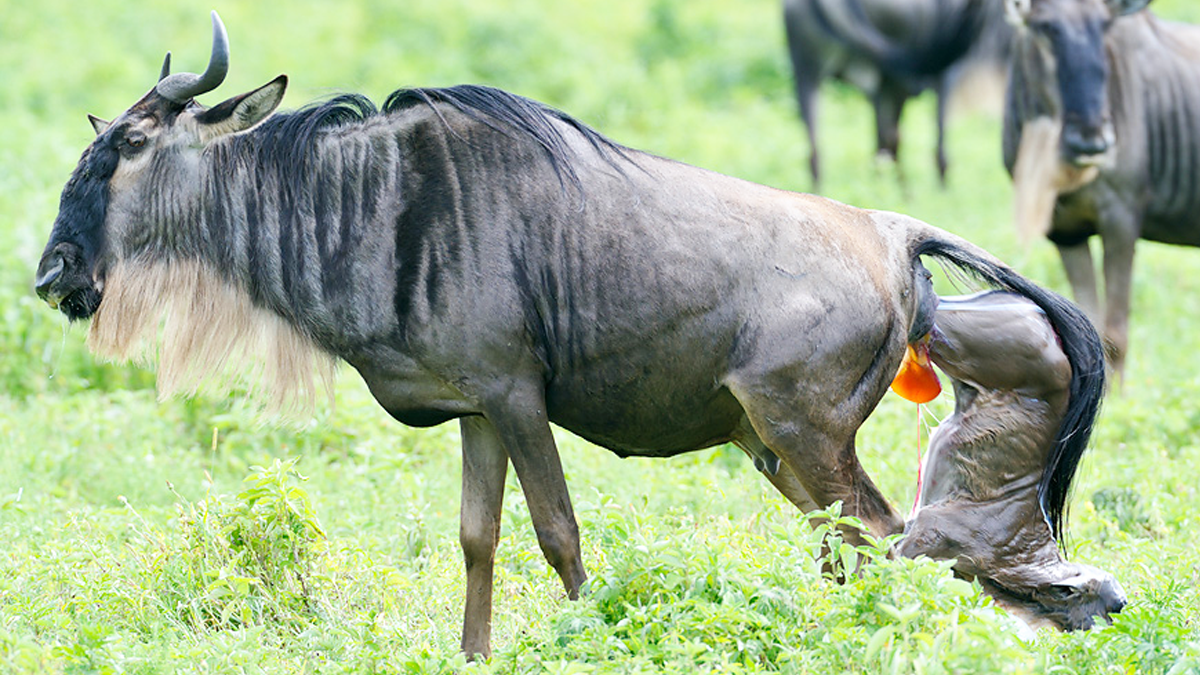
| Jan–Mar | Southern Serengeti (Ndutu) | Calving season; predators abound |
| Apr–May | Central Serengeti | Herds begin moving north; lush grazing |
| Jun–Jul | Western Corridor | Grumeti River crossings; crocodile danger |
| Aug–Sep | Northern Serengeti | Mara River crossings into Kenya |
| Oct–Nov | Maasai Mara to Serengeti | Return journey begins |
| Dec | Southern Serengeti | Herds regroup for calving |
The Drama of River Crossings
The most iconic moments of the migration happen at the Grumeti and Mara Rivers, where herds plunge into crocodile-infested waters. These crossings are unpredictable, chaotic, and breathtaking.
Best Viewing Months:
- Grumeti: June–July
- Mara: August–September
Predators on the Prowl
The migration attracts predators like lions, cheetahs, hyenas, and crocodiles. Calving season (Jan–Mar) is especially intense, with newborns vulnerable to attack.
Top Predator Hotspots:
- Ndutu Plains (calving)
- Seronera Valley (lion territory)
- Grumeti River (crocodile ambushes)
How to Plan Your Serengeti Migration Safari
- Choose your timing: Decide whether you want to see calving, river crossings, or mass movement
- Pick your region: Southern, central, western, or northern Serengeti depending on the month
- Book early: Lodges fill up fast during peak migration months
Photography Tips
- Use burst mode to capture movement
- Bring a zoom lens (200mm+) for close-ups
- Shoot from a low angle to emphasize scale
- Be patient—crossings can take hours to begin
Why It Matters
The Great Migration is more than a spectacle—it’s a vital ecological process that:
- Replenishes grasslands through grazing and fertilization
- Supports predator populations
- Demonstrates the resilience and rhythm of nature
#greatmigration #wildebeest #serengetisafari #naturewonders